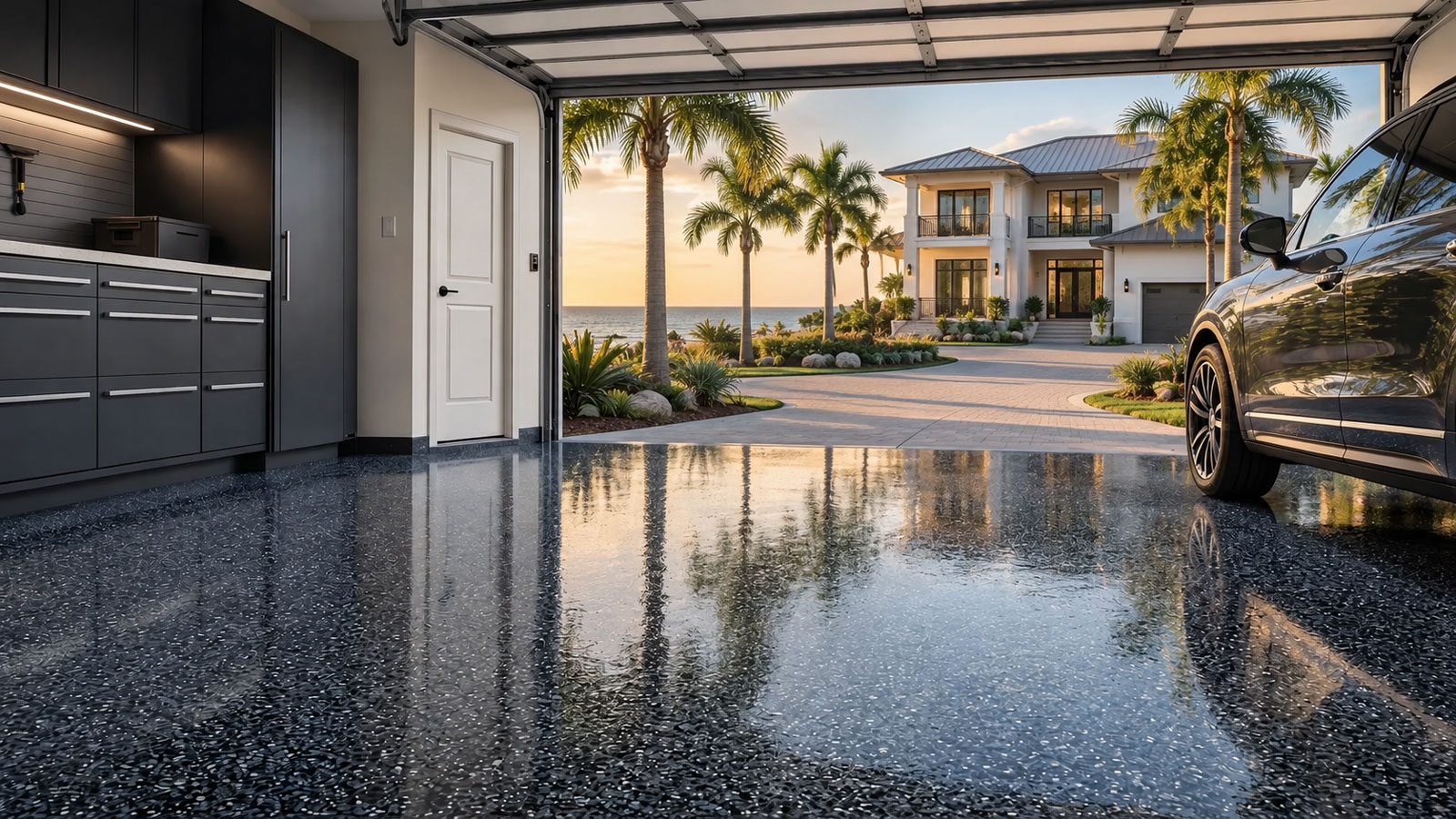
Garage Floor Coating in Quincy, FL
Garage floor coating guidance for Quincy homeowners considering epoxy, polyaspartic, or decorative flake systems.
Floor Coating Guidance for Quincy, FL
Quincy is the historic seat of Gadsden County, founded in 1828 and centered on a courthouse square that remains central to downtown. The city's Downtown Master Plan specifically addresses revitalization and redevelopment, while its Historic District program protects designated structures. Those official records show a housing and building history very different from newer Tallahassee suburbs, but they do not establish that the garage floor beneath an older Quincy house dates to the same period.
Gadsden County's comprehensive plan covers land use, infrastructure, housing and conservation, and its Planning Division administers stormwater policies. That planning context makes drainage worth checking, but it cannot diagnose water entry at any one residence. Look for wetting at driveway thresholds, downspout placement, cracks and evidence of moisture in the concrete. A coating will not change a poor grade or repair an active leak.
Quincy garage-floor projects should begin by distinguishing the actual surface: a long-used garage may have paint, oil or repaired areas, while a renovated or newer structure may have sealer or curing compounds. A properly prepared epoxy, polyaspartic or decorative flake floor can make routine cleaning easier, but the proposal should clearly state grinding, repairs, full system layers and the period before vehicles can return.
Local Context
Quincy was founded in 1828 and has a protected downtown historic district and a dedicated redevelopment master plan, while Gadsden County administers infrastructure and stormwater planning. These facts call for careful slab-history and runoff evaluation, not assumptions from architecture.
What Affects the Cost of a Garage Floor Coating?
Quincy's established residential areas and later development can produce different concrete histories. An older building may have a newer floor and a newer-looking floor may conceal incompatible coatings, so repair and removal cannot be priced by property age alone.
The detailed quote should record what the installer actually observes and separately identify any grading or moisture concern outside normal surface preparation.
- Garage construction versus house age: Quincy's historic streetscapes include buildings from multiple eras, but slabs may have been added or replaced later. Inspect the actual surface before assigning preparation or repair scope.
- Previous paint and automotive use: Floor paint, old resin and embedded oil may require mechanical removal and special cleaning. The contractor should explain what will be stripped or ground away rather than coat over uncertain material.
- Cracks and past repairs: Evaluate joints, pitting and patched sections for soundness and possible movement. Some can be treated during preparation; structural defects require independent assessment.
- Driveway runoff and downspouts: County stormwater policy is regional. Only evidence at the specific doorway establishes whether exterior water enters and whether drainage work must come before a floor finish.
- Layout and equipment staging: Detached garages, irregular footprints, steps and stored belongings affect usable working space. Include edges and preparation access rather than measuring only the open center of a room.
- Coating system and cleaning: Decorative flakes, topcoat selection, traction and cure time influence installed cost. Compare full systems and the expected cleaning routine instead of a price for a named material alone.
Call to discuss your garage, concrete condition, and project goals.
Quincy's Historic District and the Real Concrete Beneath It
Quincy's historic development dates to the early 19th century. Official visitor and city information identifies its founding in 1828, the courthouse-square town center and a recognized historic district; the City of Quincy maintains a Downtown Master Plan to guide redevelopment. These are distinct, documented characteristics, but they cannot tell an installer the pour date or repair history of a particular residential garage.
A home in a long-established neighborhood may have received a detached garage decades later. Another property may have an original outbuilding but a replaced concrete floor. Both can contain patches, old paint or oily workshop areas that need to be identified before specifying grinding and repair. The sensible question is not 'How historic is the house?' but 'What is the condition of the slab we will bond to?'
Where old coatings are present, determine whether they are compatible and sound. Even a glossy recently refinished garage may have layers that should be mechanically removed. A newer floor warrants its own curing and moisture review. A product's bond depends on preparation at the actual surface, not a neighborhood's style.
Homeowners should ask contractors to write down observed defects, planned profiling, coating removal, edge treatment, layer sequence and return-to-use times. This helps compare bids that otherwise look similar but assume very different amounts of work.
Stormwater Planning and Everyday Quincy Garage Exposure
Gadsden County's comprehensive plan includes infrastructure and conservation elements, and its Planning Division coordinates local stormwater policies. These public responsibilities reflect real land-use needs around Quincy and the broader county. They should not be turned into claims about flooding or hydrostatic pressure in a particular garage.
For a garage that gets wet, identify the pathway. Is rain entering along a sloped driveway? Is a gutter discharging at the threshold? Does the concrete remain damp even when there have been no recent vehicles or storms? The answers matter because exterior runoff, surface tracking and internal moisture require different responses.
A decorative epoxy or polyaspartic coating can give a sound, prepared floor a more cleanable finish, but it will not reverse outside drainage, prevent structural movement or substitute for water management. Persistent moisture needs suitable assessment before committing to a coating schedule, and active runoff should be corrected independently.
When wet tires and ordinary road grit are the only issue, ask about texture, topcoat durability and maintenance. A heavily textured decorative finish may require more vigorous cleaning, while a smoother finish may offer less grip. Choose based on actual use and the manufacturer's requirements, and follow curing rules before parking on the new surface.
Frequently Asked Questions
Does a historic Quincy house necessarily have an old garage slab?
No. Garages and concrete floors may have been added or replaced later. The substrate must be inspected for soundness, repairs and previous finishes regardless of the house's age.
Can epoxy fix water running down my driveway?
No. A floor coating cannot correct a driveway's grade, gutter discharge or structural leak. Resolve active water entry before treating the slab as a decorative floor project.
Should old paint be removed from a Quincy garage?
The installer should evaluate adhesion and compatibility. Failed or unsuitable material normally requires mechanical removal and preparation before a new system is installed.
Does polyaspartic cure fast enough to avoid moving vehicles?
Even faster-curing systems need preparation, repairs, application time and product-specific curing. Plan where vehicles will stay and ask when the manufacturer allows their return.
What should a Quincy installation quote include?
Look for surface assessment, old-coating removal, grinding, crack treatment, moisture evaluation if warranted, full layer specifications, edges, finish texture and maintenance instructions.